Farm Practices
Qualities we value
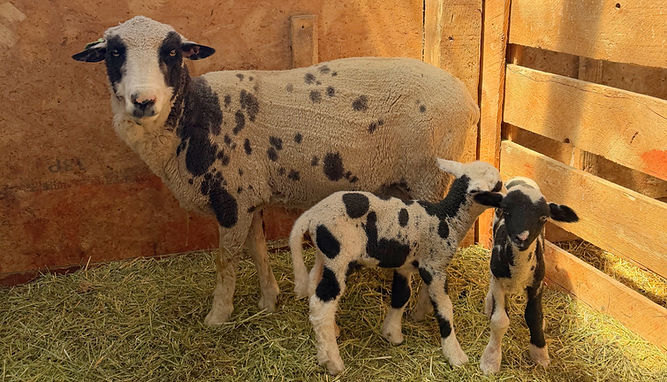
Lambs are born on our farm and kept in a barn and neighboring enclosure for safety for their first few weeks with their moms. Once big enough, the sheep are moved onto certified organic perennial pastures with native grasses and clover. The sheep are rotationally grazed across over 700 acres, which along with the clover, improves soil and animal health.
When sheep are put on pasture, mothers are left with growing lambs which minimizes stress on both of them.

At night, our sheep are protected by sleeping in corrals and watched by livestock guardian dogs. This practice is part of our non-lethal predator prevention management. After being out grazing all day, at night they are herded into their enclosed bedding grounds and let out again in the morning. These corrals also keep manure in one place so we can more easily compost and redistribute it across the fields to further build soil health.
We do not mass inoculate our sheep. If one is sick, we do our best to nurse it back to health which often involves the use of medicines, much like we would for ourselves and family.

Our flock is much more than food- comprised of a variety of fiber sheep with genetics including: merino, BFL, CVM, Corriedale, and heritage breeds: Wensleydale, Teeswater, Tunis, Cotswold.
They cover the color spectrum and present various patterns. We provide raw fleeces for handspinners, and locally processed roving, felt and yarns as well as handmade finished products we create from these things ourselves.
Shearing takes place usually in February before lambing starts, here on the farm. By doing this while it is still cold protects the mothers from black flies and infections after birthing by keeping it a cleaner process.
When it is time to take lamb to butcher, they are loaded on the farm and taken directly to butcher as opposed to feed lots or other facilities as is the normal practice. This improves animal welfare as well as the taste.
We strive to let nothing go to waste. We sell the organs and bones, pelts, and soon we will be offering wool pellets for your garden. The wool pellets are made from what is otherwise waste fiber after shearing, but as a soil amendment, can retain water in the soil and add organic matter.